- Fiber‑Cement Siding: Offers the look of wood without the maintenance. Ideal for horizontal or vertical board layouts.
- Engineered Wood: Provides warmth and natural grain patterns, and can be treated for extra durability.
- Metal Panels: From aluminum to corten steel, metal brings an industrial edge. Corten steel develops a protective rust patina that looks intentionally aged.
- Glass Curtain Walls: Floor‑to‑ceiling glazing blurs the line between inside and out, perfect for creating a light‑filled interior.
- Stone Veneer: Adds texture and gravitas. Thin stone panels are lighter and easier to install than traditional masonry.
- Concrete: Polished or left raw, concrete offers a sleek, monolithic feel that can be accented with color stains or embedded aggregates.
When mixing these materials, keep the color palette limited to three or four tones. This restraint helps maintain that clean, contemporary feel while allowing each material to shine.
Color Strategies That Elevate Modern Exteriors
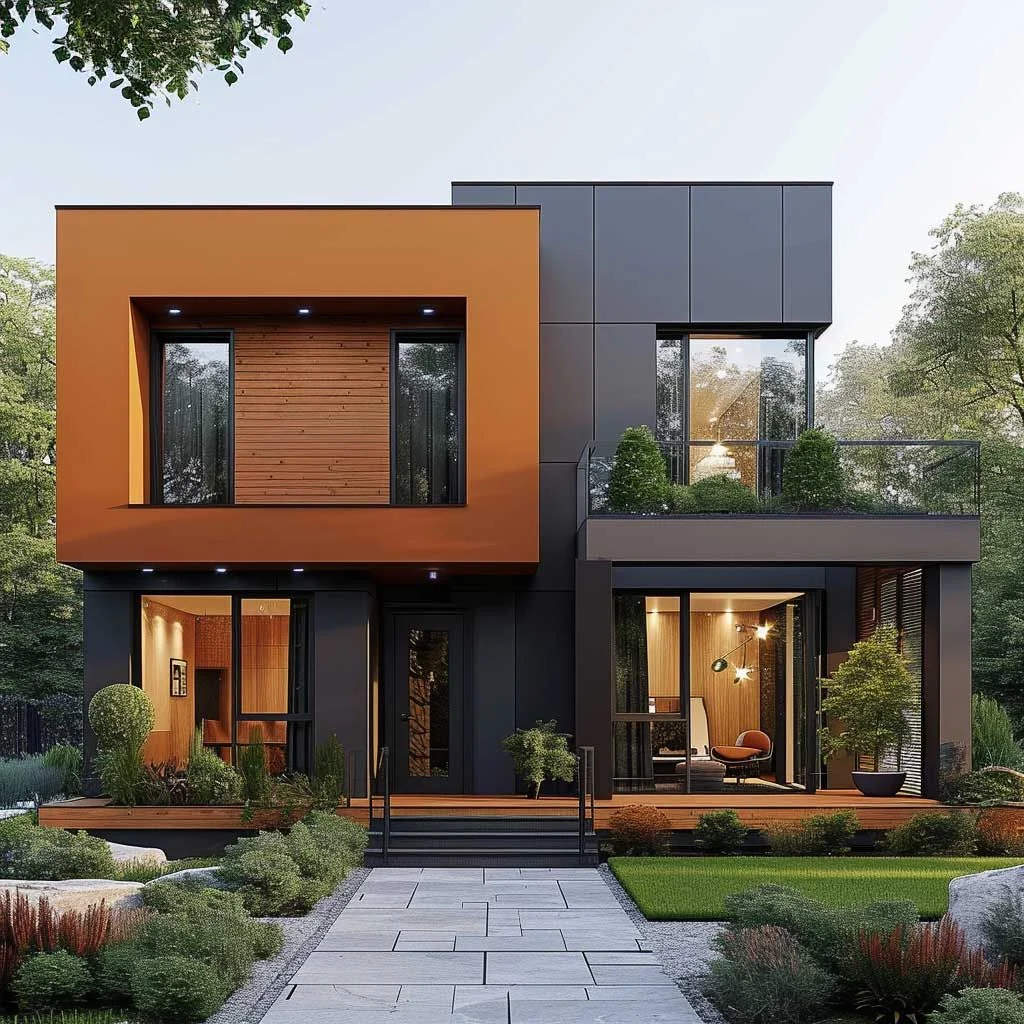
Color is the silent language of architecture. In modern house exterior designs for contemporary style, the palette is often muted, letting form and texture do the talking. Yet, a well‑placed pop of color can add personality without sacrificing sophistication.
Neutral Foundations
Start with a base of whites, soft grays, or warm beiges. These shades create a calm backdrop that highlights architectural details. They also pair well with both natural wood tones and darker metal accents.
Accent Hues
Introduce a bold accent on the front door, window frames, or a single wall. Deep navy, forest green, or even a vibrant terracotta can become a focal point that draws the eye. Keep the accent limited to one or two elements for maximum impact.