Looking to merge the charm of a farmhouse with the convenience of an outdoor kitchen, the fastest route is to start with a floor plan that deliberately carves out a dedicated cooking space beside the main living area. This approach not only maximizes entertaining potential but also preserves the relaxed, rural vibe that modern farmhouse enthusiasts crave. By positioning the outdoor cooking area near a covered back porch and integrating it with an open‑concept farmhouse layout, homeowners can enjoy year‑round meals under the sky while keeping energy use in check—a balance highlighted in the mudroom and laundry room guide.
Why an Outdoor Kitchen Complements a Modern Farmhouse
Recent data from the National Association of Home Builders (NAHB) 2026 Housing Trends Report shows that 42 % of new single‑family homes now include an outdoor cooking area, up from 28 % in 2022. Several factors drive this surge:
- Entertaining culture: Families spend 30 % more time hosting gatherings outdoors than they did five years ago (Survey by Houzz 2025).
- Energy‑efficient design: Cooking outdoors reduces indoor heat load, cutting HVAC demand by an estimated 5‑7 % during summer months.
- Lifestyle alignment: The farmhouse aesthetic celebrates a connection to land, and an outdoor kitchen extends that relationship into the backyard.
When paired with classic farmhouse elements—exposed beams, large sliding barn doors, and a spacious covered back porch—the outdoor kitchen becomes a natural extension rather than an afterthought.
Table of Contents
- Why an Outdoor Kitchen Complements a Modern Farmhouse
- Key Design Elements for Seamless Integration

- 1. Choosing the Right Location
- 2. Materials That Blend Indoor‑Outdoor
- 3. Cover and Shelter
- 4. Lighting and Utilities
- Real‑World Farmhouse Plans That Nail the Outdoor Kitchen
- Plan A: The Covered Porch & Kitchen Combo
- Plan B: Mudroom‑Connected Outdoor Kitchen
- Plan C: Large Sliding Barn Doors as the Pivot Point
- Energy‑Smart Tips for Outdoor Cooking Spaces
- Common Pitfalls and How to Avoid Them
- Pitfall 1: Ignoring Wind Direction
- Pitfall 2: Overlooking Drainage
- Pitfall 3: Skimping on Seating
- FAQ – Frequently Asked Questions
- Bringing It All Together: Your Next Steps
Key Design Elements for Seamless Integration

1. Choosing the Right Location
Placement determines usability and visual harmony. Most successful plans locate the outdoor kitchen adjacent to the main cooking zone, often through a set of large sliding barn doors that open onto a patio. This creates a fluid transition between indoor and outdoor spaces, a hallmark of open‑concept farmhouse design.
2. Materials That Blend Indoor‑Outdoor
Materials should echo the farmhouse interior while standing up to weather. Consider these combinations:
- Reclaimed wood countertops: Match interior kitchen islands while providing rustic charm.
- Stone or brick pizza ovens: Echo the farmhouse’s exposed brick walls.
- Stainless‑steel appliances: Offer durability and a sleek contrast to natural textures.
3. Cover and Shelter
A covered back porch—whether a traditional gable roof or a modern pergola with retractable canvas—protects the cooking area from rain and harsh sun. According to the U.S. Department of Energy (DOE) 2025 Climate‑Smart Home Guide, a well‑insulated porch can reduce seasonal heating and cooling costs by up to 12 %.
4. Lighting and Utilities
Install weather‑rated LED fixtures for energy efficiency and consider a dedicated outdoor breaker panel to power grills, refrigerators, and lighting without overloading the main circuit. A simple tip from the 2026 Energy Star Outdoor Cooking Checklist: route all wiring through conduit and seal penetrations to prevent moisture ingress.
Real‑World Farmhouse Plans That Nail the Outdoor Kitchen
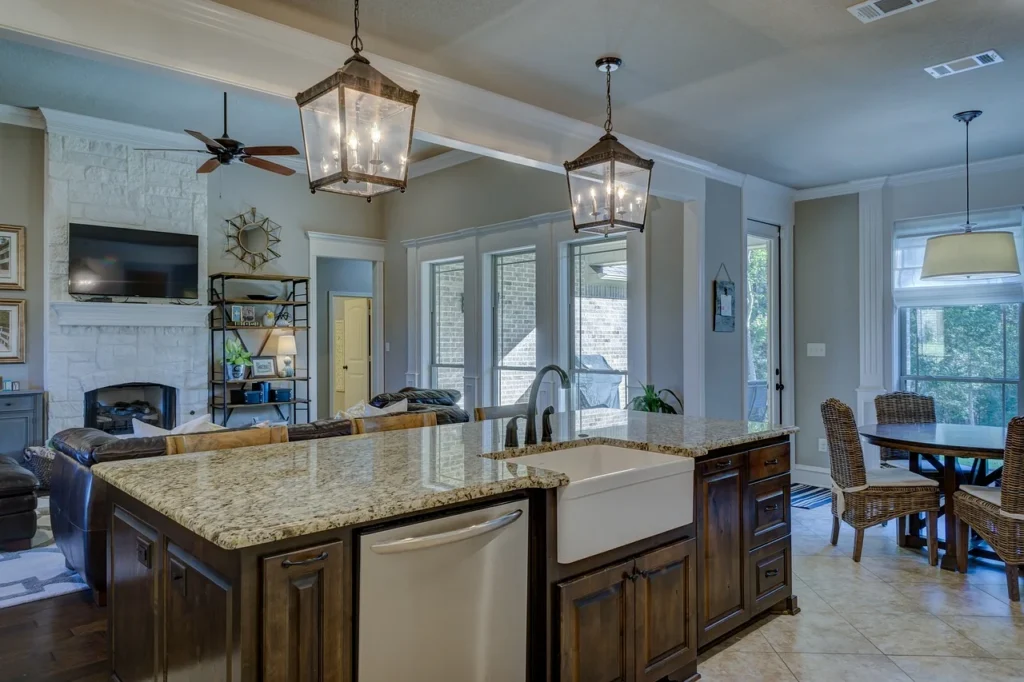

Seeing theory in action helps translate ideas into reality. Below are three plan types that already incorporate outdoor cooking spaces, each with its own twist on modern farmhouse living.
Plan A: The Covered Porch & Kitchen Combo
This layout features a covered back porch that runs the full width of the house, with a built‑in grill station, sink, and countertop extending from the indoor kitchen through a set of large sliding barn doors. The open‑concept living room flows directly onto the porch, allowing guests to move from the dining table to the grill without missing a beat.
Plan B: Mudroom‑Connected Outdoor Kitchen
Integrating the mudroom and laundry room with the outdoor cooking area creates a practical flow for cleaning up after a barbecue. The plan positions the mudroom just off the kitchen, with a back‑door that opens onto a compact patio equipped with a gas grill and prep station. This design is highlighted in the mudroom and laundry room guide, emphasizing efficiency and low‑maintenance living.
Plan C: Large Sliding Barn Doors as the Pivot Point
For homeowners who love dramatic transitions, the large sliding barn doors serve as both a visual focal point and a functional gateway. When opened, the doors reveal a fully equipped outdoor kitchen that mirrors the indoor layout, creating a symmetrical feel that’s perfect for photo‑ready gatherings.
Energy‑Smart Tips for Outdoor Cooking Spaces
While the outdoor kitchen adds fun, it also presents opportunities to boost overall home efficiency.
- Solar‑powered appliances: Install a small photovoltaic panel on the porch roof to run low‑draw lighting and a ventless refrigerator.
- Insulated countertops: Use a thin layer of rigid foam beneath stone surfaces to reduce heat transfer to the ground, preserving cooler soil temperatures in summer.
- Smart grilling controllers: Devices that sync with mobile apps can optimize fuel usage, cutting propane consumption by up to 15 % (EPA 2025 study).
- Rainwater harvesting: Capture runoff from the porch roof to flush the outdoor sink, decreasing municipal water demand.
Common Pitfalls and How to Avoid Them
Even seasoned designers can stumble when adding an outdoor kitchen to a farmhouse plan. Here are the most frequent errors and practical fixes.
Pitfall 1: Ignoring Wind Direction
Placing a grill on the leeward side of the house can cause smoke to drift into indoor living spaces. Solution: Position the cooking zone on the side that receives prevailing breezes, or install a vent hood with a built‑in smoke extractor.
Pitfall 2: Overlooking Drainage
Water pooling around the prep area can damage cabinets and stone surfaces. Ensure the patio slopes at least 2 % away from the house and incorporate a French drain if the site is flat.
Pitfall 3: Skimping on Seating
An outdoor kitchen without adequate seating becomes a “cook‑only” zone. Integrate built‑in benches or a farm‑style dining table under the covered porch to create a cohesive social space.
FAQ – Frequently Asked Questions
- Do I need a permit for an outdoor kitchen? Most municipalities require a building permit for permanent structures, especially if gas lines or electrical circuits are involved. Check local codes before breaking ground.
- What’s the ideal size for an outdoor cooking area? A 12 × 12 ft space comfortably accommodates a grill, prep sink, countertop, and storage, while still leaving room for seating.
- Can I use the same flooring material inside and outside? Yes—porcelain tiles rated for outdoor use or sealed concrete can create a seamless transition between indoor and outdoor floors.
- How do I protect appliances from winter weather? Choose weather‑rated enclosures or store portable appliances in a shed during the cold months. For cold‑climate regions, insulated covers are a smart investment.
Bringing It All Together: Your Next Steps
Designing a farmhouse house plan with an outdoor kitchen space isn’t just about adding a grill; it’s about crafting a lifestyle hub that blends rustic aesthetics with modern convenience. Start by selecting a base plan that already incorporates features you love—whether that’s a mudroom, a covered back porch, or those iconic large sliding barn doors. From there, fine‑tune the layout, choose durable materials, and embed energy‑smart solutions to keep utility bills low.
When you’re ready to dive deeper, explore our ultimate guide to attached two‑car garage farmhouse plans for additional storage ideas, or check out the walk‑in pantry plans for more indoor‑outdoor flow inspiration.
By following these guidelines, you’ll end up with a farmhouse that feels both timeless and cutting‑edge—perfect for weekend barbecues, cozy winter meals, and everything in between.
Metadata (for system use only):